
No Silent Bystanders in an Evil Time
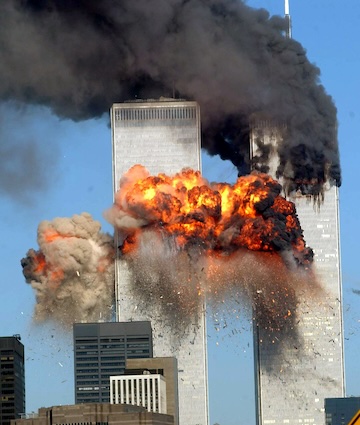
At a parish Mass yesterday, the 23rd Sunday in Ordinary Time, I set the scene by reminding all who had gathered to pray for all who are beginning a new school year; for those who labor, particularly those who have wearying jobs, and those who wish they had good jobs but don’t, or are out of work. I looked ahead to next Sunday, a special celebration of the 120th anniversary of Our Lady of Sorrows parish; but looking ahead to Friday of this week, I asked us to pray for all those who died on 9/11/01, 25 years ago.
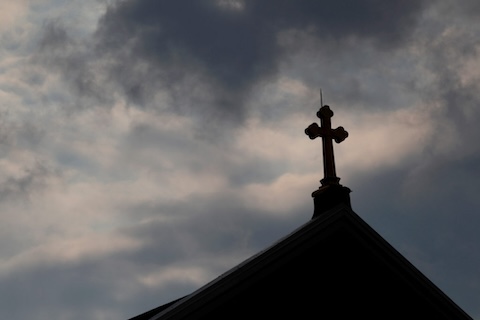
When time came for the homily, I again reminded the congregation of the anniversaries of the parish and of 9/11, but added another dark remembrance: in January 2027, we mark 25 years since the eruption into public view of the clergy sex abuse scandal in the Catholic Church, its epicenter here in Boston, with all the dramatic happened dramatized in Spotlight.
My point then was that paying more attention, and speaking up, could have changed things. In 2001, sources tell us, there was plenty of evidence that a plot was taking shape, a large number of men from abroad coming to the United States for flight school, threats circulating on the relatively new internet. The experts paid to watch for such things either weren’t watching, or were unable to connect what was beginning to happen before their eyes — and so 9/11 happened.
Now all that was admittedly a matter for the experts to pick up on or miss, but the clergy abuse crisis was happening locally, in our parishes and schools, over many decades – and some of us, at least, perhaps in moments of doubt, decided to keep silence, to say nothing. Perhaps it would be too dangerous to raise suspicions about this priest or that one, without 100% proof of the crimes being committed. But what if more “ordinary Catholics” over the preceding 60 years had spoken out, refused to honor a code of silence, and instead individually and together confronted the abusers? And what is those who surely know, who kept meticulous records of abusers, had refused to play along, and instead gone public?
I was driven by Sunday’s readings to focus on the dark examples, 9/11/01 and 1/02, leaving aside happier events, like a parish’s 120th anniversary. The readings were very clear. Consider Sunday’s first reading and Gospel passage.
Ezekiel makes very clear that while people are responsible for their own sins, those nearby – family perhaps, neighbors, the community of worship – have a duty to confront a person who is doing evil, or suffer the same consequences, for the survival of Israel — everyone — is under threat:
“Thus says the LORD: You, son of man, I have appointed watchman for the house of Israel; when you hear me say anything, you shall warn them for me. If I tell the wicked, "O wicked one, you shall surely die,” and you do not speak out to dissuade the wicked from his way, the wicked shall die for his guilt, but I will hold you responsible for his death. But if you warn the wicked, trying to turn him from his way, and he refuses to turn from his way, he shall die for his guilt, but you shall save yourself. (Ezekiel 33:7-9)
Yes, the wicked shall be held accountable — but so too those who witness their evil and do not confront them and warn them to stop.
The Gospel, I pointed out, makes a similar point, now with more of a sense of communal support in the work of speaking up and confronting a person who is doing what is wrong:
“Jesus said to his disciples: "If your brother sins against you, go and tell him his fault between you and him alone. If he listens to you, you have won over your brother. If he does not listen, take one or two others along with you, so that 'every fact may be established on the testimony of two or three witnesses.' If he refuses to listen to them, tell the church. If he refuses to listen even to the church, then treat him as you would a Gentile or a tax collector. (Matthew 18:15-20)
That is, for the sake of the community, and perhaps also to sober up the evildoer, they are to be expelled, not welcomed back until they change. Matthew’s scenario is admittedly not the same situation as Ezekiel warning about his listeners about. Nor does either reading neatly fit the 25th anniversary crises I mentioned, September 2001 and January 2002. But the similarities are great enough, that we can take the cautions and instructions to be applicable to us in similar situations, in the community and in the wider world.
For the point is not only to remember, but also to be aware and on guard, moving forward. Can we, as citizens, at home and on our jobs, in our places of work and worship, resist the temptation to avert our eyes and let small evils grow into larger and larger ones, the tolerated sin a parent to a thousand more? Will we assume somebody else knows what’s going on, and remain uninvolved? And as I did not say at Mass (since I avoid explicit current politics): Will we keep our distance from politics and the downward spiral of our nation, the decay of the common good? For example, will we be silent and get on with our daily lives when good neighbors are arrested as criminals, dragged away, and sent off to distant lands?
We all want our communities of faith to be holy, open to the mysteries of God, and grounded in love — as St. Paul says in the second reading, “Love does no evil to the neighbor; hence, love is the fulfillment of the law.” But love and mutual care and responsibility do not just happen. As Ezekiel tells us, “If you do not speak out to dissuade the wicked from their way, the wicked shall die for their guilt, and I will hold you responsible for their death”.
I close with another quote, this time from a Sunday New York Times op-ed (September 6) by Frank Kendall, a retired Secretary of the Air Force. In the course of writing about the duty of military commanders to think not only about what is possible, but also about what is right. Commanders can show the way, and also denounce wrong paths that are merely exercises of brute power. Toward the end, he remarks,
“Many lower-level officers I have spoken with are privately appalled but afraid to challenge what they are seeing. The collective hope seems to be that if they can all just go on as if nothing unusual is occurring, this time will pass and nothing bad will happen to them — no loss of position, no demotion or forced retirement, no loss of reputation, no removal from a promotion list by Pete Hegseth, the secretary of defense. But all officers take an oath to “support and defend the Constitution of the United States against all enemies foreign and domestic.” This demands that they think about what the military should or should not do and advise the president and the secretary of defense on the policy choices they make. It also means that there are some lines that they cannot cross, even if ordered to do so by the commander in chief.
Some lines we cannot cross, some possibilities we simply say no to. Let us remember these cautionary words to as we observe the joyful and sad anniversaries of the days and months to come.